Insights from New York City

We recently featured the most multicultural cities in the world on our Social Media channels. You might wonder how it feels to live in a multicultural environment where multiple languages are spoken, and different customs and traditions are commonplace. We interviewed Pam Hendricks Fauquenot, Assistant Manager and language trainer at inlingua New York City and asked her, how the multicultural environment has shaped her way of thinking and what she values most about living in a diverse space.

1. What do you like most about living in New York City?

”I honestly feel that there is no place in the world like NYC. It has a heartbeat and a pulse of its own, an unmistakable energy rising from the people and their passions. Granted, all that energy can be overstimulating at times and city life is not for everyone, but it is overall a city that inspires you. You have the freedom to be who you are which, in turn, teaches you to be more tolerant of others. Are New Yorkers famous for being impatient, yes! But this stems from the general rejection of idleness….  gotta keep moving forward! Life is happening all around you. In NY you can truly feel like anything is possible. You can find yourself, lose yourself, reinvent yourself.”

2. Can you feel that you live in a multicultural city? How does that manifest itself in everyday life?

”NYC is home to a myriad of ethnicities and prides itself in its cultural diversity. On any given day you can hear several different foreign languages spoken. Walk down any street and you will pass by restaurants offering all kinds of world cuisine. Throughout the year there are a celebrations, festivals and parades with music, food, costumes, and other traditions. While Chinatown and Little Italy are well known in the tourist guides, communities pop up in all parts of the city like Korea town or Little Brazil. Jackson Heights, Queens is known to be the most culturally diverse neighborhood in the United States.  So yes, multiculturalism is woven into the very fabric of NYC. Although we may not visit her often, all New Yorkers are keenly aware that Lady Liberty remains an important symbol at the entrance to our harbor.”

3. Has multiculturalism shaped your way of thinking? If yes, how?

”I grew up in NYC, born and raised in Brooklyn till I was 12, then a move to the suburbs of Long Island. Growing up in the city I was accustomed to a multiracial and multiethnic community. In primary school we would quite often have newly arrived students who did not speak English and we were taught to welcome and encourage them. The move to Long Island was different and I found myself in a predominantly white, all American environment. This gave me my first glimpse of intolerance and prejudgement. By the same token, I could see how enriching my early childhood experience had been. I began to understand the need for openness and the benefit of shared experiences. So yes, I moved back to Manhattan at the age of 21.I love to travel and discover new people, new places, new ways of life.  I thrive in a multicultural environment where people help each other, learn from each other and find joy in our similarities as well as our differences.”

4. Have you personally faced any downsides of multiculturalism?

”I wouldn’t say it is a downside, but more of a phenomenon. People want to surround themselves with people like themselves. This is why so many communities arise in various parts of the city. Not only are there predominantly Chinese, Middle Eastern, and Italian neighborhoods, but we have Little Guyana, Little India, Little Odessa and so on. It is actually a lot of fun this total immersion way of experiencing a culture. In NYC you can celebrate who you are and where you come from yet still call NYC your home. What’s important is that you give that same respect to others. Any downside would stem from that lack of respect and discrimination unfortunately does happen.  Many of these ethic communities emerge in the outer boroughs of NY where more working-class families live. They are not generally found among the glitzy, Manhattan skyscrapers. They are, however, the very soul of NYC.  Manhattan is where it all comes together, the different cultures and economic levels all blending together in the symphony of everyday life.”

5. What are the positive aspects about living in a multicultural environment?

”We live in the age of globalization. Opportunities have no borders. Cities are home to countless international companies. So, living in a multicultural city, you evidently increase your chances of finding a job to match your skill set. Companies in turn, benefit from a diverse staff who can always bring new ideas and points of view to the table. With the exchange of ideas and shared experiences, friendships are formed, borders are crossed, and we gain a better sense of our world. Having a working and/or living experience in a foreign country, acquiring foreign language skills, thinking like a global citizen….these are great assets in today’s world. We can achieve so much when we connect and communicate.”

Would you like to find out more about inlingua New York City? Click here! Are you living somewhere else? Find your local center if you click here.


Insights from New York City

We recently featured the most multicultural cities in the world on our Social Media channels. You might wonder how it feels to live in a multicultural environment where multiple languages are spoken, and different customs and traditions are commonplace. We interviewed Marion Valladares Smith, language trainer at inlingua New York City and asked her, how the multicultural environment has shaped her way of thinking and what she values most about living in a diverse space.

1. What do you like most about living in New York City?

”I like cities and this one is bustling, bursting with life and history. I like that I can run to the corner store even late at night, have my choice of foods somewhere in the City, can take a subway or ferry to the beach, have easy access to museums, galleries and other cultural events if I am so inclined. Just having a coffee and bagel from a street cart vendor is so iconic – who needs Starbucks? Every corner has a story, every street has a character and every neighborhood an ethos.”

2. Can you feel that you live in a multicultural city? How does that manifest itself in everyday life?

”Multicultural started here: previous immigrants entering through Ellis Island have left an indelible mark on the City – visit sections of the City named after early residents: Little Italy, Chinatown, Loisaida, Curry Row, Atlantic Avenue, Harlem, Arthur Avenue, Jamaica, Flushing, and now even Little Korea and soon, maybe Quisqueya Heights!!! Most diners are run by Greek immigrants, most 24-groceries by Middle Easterners, salad bars by Koreans and the fact that City Public Notices are posted in several different languages as Russian, Haitian, Chinese, Korean, Bengali…..never let you forget that more than a 100 different ethnicities are represented here.”

3. Has multiculturalism shaped your way of thinking? If yes, how?

”One cannot but help be influenced by having to rub shoulders with all these different cultural groups: one must become more tolerant and be open to other ways of doing things. However, it is my strong belief that assimilation should be encouraged for the growth and well being of all.”

4. Have you personally faced any downsides of multiculturalism?

”No.”

5. What are the positive aspects about living in a multicultural environment?

”If anybody was so disposed, they could learn to communicate in other languages from having friends from other cultures, interacting with them during their celebrations and food events. Knowing people from other parts of the world can only deepen your curiosity about that country and may insipre travel for leisure, work or exploration. People from other cultures living in the City typically speak more than one language which can help in securing jobs in related fields (interpretation, teaching, communications…).”

Would you like to find out more about inlingua New York City? Click here! Are you living somewhere else? Find your local center if you click here.

Insights from Singapore

We recently featured the most multicultural cities in the world on our Social Media channels. You might wonder how it feels to live in a multicultural environment where multiple languages are spoken, and different customs and traditions are commonplace. We interviewed Chris, English trainer at inlingua Singapore and asked him, how the multicultural environment has shaped his way of thinking and what he values most about living in a diverse space.

1. What do you like most about living in Singapore?

”There are a lot of things to like about living in Singapore.  As a tropical, multicultural metropolis with a high standard of living, Singapore is comfortable and full of interesting people.  For people who love summer, the weather is perfect for going to the beach, though too humid.  Singapore is a tiny nation with a booming economy, so it’s easily policed and one of the safest places in the world.  The government is interested in the welfare of its residents and the quality of education and healthcare is of a high standard.  As a nation with four official languages, communication can be a fascinating blend of sounds, words and phrases.”

2. Can you feel that you live in a multicultural city? How does that manifest itself in everyday life?

”Singapore is not only a multicultural city but has 4 official cultural groups.  Just walking down the streets, the variety of faces, dress and speech reveal the depth of Singapore’s multiculturalism.  Most housing is government controlled with “racial quotas” enforcing certain percentages of apartment ownership by the 4 main culture groups, so you will always see a mix of cultures even around your home.  Many signs and announcements come in multiple languages, with the majority of Singaporeans speaking more than one language.  There are so many restaurants representing food from so many Asian cuisines, not to mention all the fusion.  Having a large Muslim population, you can see more business at restaurants and markets with halal certification.  Mosques, Buddhist and Hindu temples churches and synagogues can be found sometimes within the same block.  Holidays are also divided amongst Christian, Buddhist, Muslim and Hindu special days.  In Hungry Ghost Month, the side-streets are littered with ashes from burnt offerings to ancestors.  During Ramadan, fasting colleagues sometimes go home early and it’s impossible to find a place to eat out at sunset.  Deepavali and Thaipusam are some of the most colourful spectacles of the year.”

3. Has multiculturalism shaped your way of thinking? If yes, how?

”Multiculturalism has always been right in front of my face.  It’s been impressed into me since I was young that culture is an important part of identity and that we must strive to recognize and respect that value as much for others as we feel it for ourselves.  Respecting cultural values is one of the most important values in building a cohesive society, particularly as the world grows more connected day by day.  But I have also seen the incongruous moments when this is not as easy as it sounds and have recognized the effects of dominant cultures on minority cultures.  I’ve learned that, just like relationships between individual personalities, relationships between cultures can be a bumpy road, but there will always be more benefit in unity than in separation.  I’ve also seen that culture is constantly evolving and mixing and that, like individuals, culture needs the opportunity to grow.”

4. Have you personally faced any downsides of multiculturalism?

”While multiculturalism has ideas of collaboration and respect at its core, as a rigid policy it can also be harmful, particularly to individuals who often struggle with plans meant to benefit groups at a larger scale.  Housing quotas restrict opportunities for many, though protecting opportunities for others.  Cultural conflicts can also affect relationships as the closer people get, the more some may expect those close to them to adopt the same values.   Also, while society may prioritize a certain vision of multiculturalism, groups that don’t fit that broad, simplistic vision may continue to face disadvantage.  People who don’t fit neatly into traditional categories may have special advantages or may also be rejected by groups who define themselves by distinction from other groups, rather than by seeing themselves as a contributing factor to a larger, varied but unified culture: that of Singapore as unified culture itself.”

5. What are the positive aspects about living in a multicultural environment?

”The pure joy of having people who are different from myself is the main benefit of multiculturalism in my life.  Experiencing new ways of thinking and using new perspectives to re-examine my own is a continual inspiration and motivation.  Language is often the key as connecting with others’ in their first language can be a more personal and emotional experience.  As a food-lover, the continual mixing and creativity created by cultures combining and sharing will always produce results I can appreciate daily!  Finally, the understanding of the things that connect us, often unexpectedly, helps to make me a more empathic and supportive member of my community at a local, civic, national and global level.  Being a more supportive member of my community means more friends, more work, more opportunities and more growth.  As they say: if you want to go fast, travel alone; if you want to go far, travel together.”

Would you like to find out more about inlingua Singapore? Click here! Are you living somewhere else? Find your local center if you click here.

“In order to progress, one needs to reassess their stance towards mistakes, especially in learning.” – Miriam Mircea

Miria Mircea is a language teacher at inlingua Dessau and Halle as well as founder of Fort Knox PR. She has been giving motivational speeches and coaching people since many years. Today, she shares her personal experience about failure with you.

Tackling the Topic of Failure

This is a tough one. How does one tackle the topic without dwelling into negativity and even depression? I will try to answer my own questions but I cannot promise a Happy End…

Can we truly see failure as an engine to push us forward and to make us learn a valuable life lesson?

As I was writing down these thoughts, we were finding ourselves in the midst of the ancient Roman days of Saturnalia, what most of us know as the days before Christmas. As a history teacher, I cannot oversee how my Roman ancestors have interpreted this time in December. The days between the 17th to the 22nd of December were a symbol of celebrating mistakes, failures and lacks. As the rich were switching roles with the poor and the slaves, they would praise the value of what they didn’t have, even if temporarily. There is a lesson here that transcends time and place.

Well, I can say this: failure impacts everyone differently. It is such a variable that it becomes a defined notion and moreover a stable one in our lives. For who has not failed at least once?

Life is a continuous learning process. Those who wish to grow mentally, emotionally and even financially never stop educating themselves.

My Very Own Experience With Failure

Some 10 years ago, I took a life changing decision: to move to a foreign country, that I didn’t know much about and most certainly didn’t speak the language of. I was not crazy. Just brave enough to try my chance at a better life with a really good person next to me.

Fast forward: having known from the get-go the amazing life changing advantage that speaking a foreign language gives you, I had decided on my second day in Germany to take German lessons. So we went right away to the only school whose name I would see everywhere: inlingua.

Yes, that is right. I became a student at the very school I am working for. And that is precisely why I know exactly how our clients and participants feel as they sit down behind a desk to learn a language new to them.

I have never had issues with learning and – being a student over and over again – to me age is really nothing but a number. Thanks to my parents, I have learned to appreciate education and the elegance it offers. Taking part in private German classes, having come after 26 years of school and academic learning, I knew very well what I was looking for in a teacher. And I was not afraid to express my needs and wishes so that those hours spent in the classroom would be successful.

But little did I know that German, to me at least, was a tough nut to crack. I had stupidly underestimated its complexity and depth. Failure number one: not taking the first steps in learning it seriously.

How to Deal With Difficulties

Dwelling into learning German has been such an eye-opener, quite a humbling experience and most importantly, a self-discovery one.

Prior to moving here, I had become a self-didactic person, taking about 5 years to learn how to read, understand and speak Greek, for the sake of family. Even earlier in my timeline, I had loved studying grammar, some Latin and generally literature. So I can safely state that I was prone to developing a talent for foreign languages and it helped me on my self-discovery journey as well as disciplining myself to seriously learn German.

Notable failure as a student: I’m a procrastinator, for I work best under pressure and deadlines. The closer the deadline, the faster and better I perform. That’s my structure and it wasn’t about to change at the impeding approach of every German exam I had to take. By the way, I took and successfully passed 4 German language levels, currently sitting comfortably at C1, which is the academic level.

Going back in time a little bit, I have to give due credit to my parents for always encouraging me to move forward, do my best so that when I would look back, I would never say that I had not done enough. Hence, my stance towards any kind of learning or academic “stress”: I do not have it.

Now, ever since I have become a teacher here in Germany, I have always tried to install this mentality into my students’ minds: do not be a people-pleaser, because that is crippling. Everyone is so unique that there literally is no fixed ideal formula for learning something new.

As a teacher, an educator, a life coach, a motivator, one must be flexible and especially able to adapt fast to someone’s needs and goals. I know it all looks great on paper, but it does not always work like that, at least it did not for me.

I had to train myself first in order to become a trainer and that took a lot of experiments that have not functioned. I received really disappointing feedback that would have set people back but I chose to go home and “digest” it and see what I could learn from how others saw my teaching style.

Minor Failures Equal Great Lessons

Our minds need to readjust at how we see a small negative event.

On the daily, I meet and talk to people from all walks of life. Based on my almost 8- year experience, I had a chance to become a speaker at an online event („I love Failure“ series) and try to convey a message of positivity, in spite of what some see as downfalls. Learning is never a straight line. Good days are followed by bad days and then good days come again.

I believe that the failure mentality and approach are both cemented in the collective consciousness for years, if not centuries. Perfection has always been sought after, even if not openly expressed. In order to progress, one needs to reassess their stance towards mistakes, especially in learning.

The feeling of making mistakes is crippling for some. I witness it regularly and its effects on the human mind: it is paralyzing and it robes people of their moments of joy. When we decide that we want or need to dive into learning a new language, we should be ready to accept the apparition of mistakes.

Shedding a new light on errors brings more self acceptance and it is in a way therapeutical.

Tips on How to Learn From Failure

My colleagues and I always say that teachers are part-time therapists, of course, on a half-jokingly note.

I would not want the readers to be left with a negative impression, therefore I would conclude by including a few tips that my colleague, Muhammad Ali, and I have put together to motivate and shed some light on learning.

Trying has no price, to paraphrase a Romanian saying. As in, test the language that seems interesting or sexy sounding enough to make you want to take some classes or purchase a book, e-book and so on. Remember that if you must learn a language out of purely private interest, you can switch to another one anytime, no pressure there. Find out which glove suits you best.

If you have to learn a new language for professional reasons, do not see it as a burden, but as an unforeseen chance to develop and grow. If your company or employer covers the costs of learning, even better. As teachers, we are aware that breaking the ice when it comes to a different language can be cumbersome, especially if you don’t have many good memories or experiences related to school or learning by heart, under pressure.

A new foreign language is a passport and a key to unlocking fresh opportunities. At times, it does mean more cash flow, a better reach, more networking and all the good stuff that these generations are chasing, particularly during these strange and somewhat confusing times of the newly- adored `Home office”.

When learning a language which is a very memory-intensive task, using visualizations helps develop a much better understanding of words. We, as human beings, take our majority of information visually and using this mean of data gathering isn’t easily forgotten. When the next time you see that thing the words will simply pop in your head.

Find something that you absolutely love to do, be it a sport or a hobby and try to find info about that using the language you want to learn. Because you’ll be able to pick vocabulary faster this way knowing something about that hobby already and the more you practice the stronger the connections between the two get.

Given the blessing that is the internet today, we can find communities of people around the world who speak the language of interest natively and asking them for help, picking up tips and quips will not only give you a faster mean of picking up the language but boost your confidence in speaking the language.

By Miriam Mircea

Would you like to read more about the topic? Read our most recent blog about setting goals here. We also have a series of blog articles on motivation. You can find them here.

Introduction 

In this series of 12 blogs, I have given you an insight into the reasoning behind the inlingua method and materials as well as a brief introduction to some inlingua techniques. I have highlighted some of our products and given a few additional tips for language trainers along the way. In this final blog in the series, I would like to focus on how we train our language trainers to ensure a standardized teaching method throughout our language centers worldwide.

Prior to the Academy

Before the inlingua Academy, the teacher-training was presented by our Method and Materials Consultants travelling world-wide to our centers to conduct live training courses in an individual center or area. This was very time-consuming and costly for the language centers. Although there was the benefit of direct physical contact with the new language trainers, training could, in most cases, only be done once or twice a year which meant untrained language trainers would have to wait and the centers’ Director of Studies would have to try to train new trainers themselves to keep the ball rolling. With the high turnover of staff in the language teaching industry, this could lead to a certain amount of gaps or misinformation being handed down. How could I ensure a standard and reach all the language centers in the world?

Eventually, with the increased use of technology and sophisticated software being developed it became obvious that some sort of distance learning approach would be possible.

Running parallel to this was the further development of the inlingua methodology and material to match. It was necessary to preserve the original method that had been the backbone of inlingua language training for almost 50 years, but at the same time bring in the enhanced method to include further reading, listening and writing skills without compromising our basic principles.

A sophisticated Learning Management System (LMS) needed to be developed that not only covered the theory, but gave demonstrations by video, self-checking and testing. Trainer- guided discussions and tasks would have to be included as well as some sort of benchmark in the form of a recorded or observed lesson. After creating a prototype, this was developed into the inlingua Academy LMS.

The Basic Training course 1/3

To preserve the ‘Holy Grail’ of the inlingua method, the first course new trainers encounter on the inlingua Academy is based on the inlingua method as it was done traditionally. This is an important course as it explores and teaches some of the techniques used in the inlingua classroom. Trainers are obliged to study this course for at least eight hours, and this should be done over a period of a few days as there is a lot to take in. Most centers use this course as part of their induction process and new trainers are gradually introduced to live training with the assistance of the center’s Director of Studies or Head Language Trainer in parallel. The Basic Training course is also available in German.

The Basic Training course 2/3

The second course in the current basic training is focused on how the micro-skills of reading and listening have been integrated in the latest inlingua material. This course involves trainers in discussing targeted topics and sharing their views or experiences as well as having them do tasks and quizzes as they progress. They are already encouraged to think ‘why’ they are doing something in the class as much as ‘how’ to do it.

 

The Basic Training course 3/3

This course completes the basic training and covers different contexts such as one-to-one lessons and business learners. The course is assessed by the trainer submitting a video of them conducting a lesson. It can also be assessed at the center by an experienced trainer or Director of Studies (DoS) filling in specific feedback forms. The trainer needs to have completed the basic training online her/himself as a minimum.



Further courses

Additional course on the Academy include training for the Virtual Classroom (courses being revised at present), The Advanced inlingua Language Trainer Certificate course, The Train-the Trainer course (for DoSs) and two courses dealing with further English language teaching topics.

Check out the inlingua Academy here

Don’t miss our next series of blogs on The Faces of inlingua.

How do you Learn a language?

Language Learning Styles – Common Beliefs

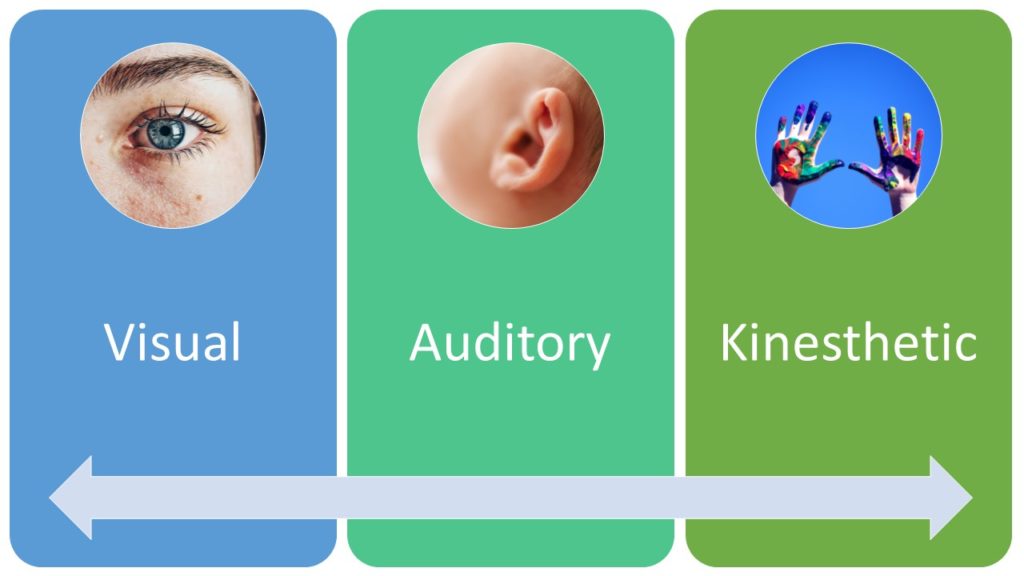
One of the most commonly believed theories of language learning styles is VAK (visual, auditory or kinaesthetic)*. This refers to a learner’s preference for how she/he interacts with language. Although this is often referred to on teacher training courses, there has been research by Willingham, Hughes and Dobolyi, that refute these and other learner style theories. They conclude that scientific support for the established learning theories is lacking and that educators’ time and energy are better spent on other theories that might aid instruction.

VAK Language Learning Styles_inlingua Blog

One example of the adverse influence of VAK is, in my experience, language learners and often language teachers in teacher training, insist that they are ‘visual learners’ and need to see the word before they can learn to speak it. Mostly, this has been vaguely learned in some previous course or developed by here-say. I usually ask them how this would apply to a person that speaks one of the main European languages like Spanish or French learning Japanese or Arabic (consider the writing). Although I would not go as far as to refute that people have different styles of learning, I would question the relevance of this to effective language learning and teaching especially at the beginner stage. As I argue in my previous blog, learning a language should begin with learning to speak it.

So, bearing this in mind, how do we help learners to learn a language at inlingua then?

*For other common learning styles theories see further reading.

How the inlingua Method Works

The Three ‘P’s

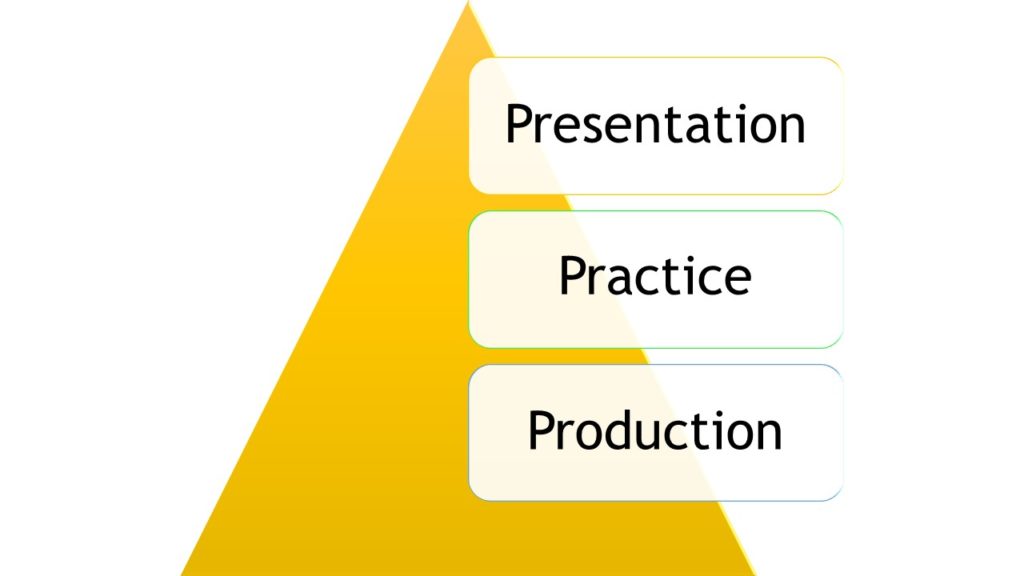
3 Ps_Presentation, Practice, Production_inlingua Blog

The process of the three ‘P’s: Presentation, Practice and Production, is a well-tried-and- tested approach to language teaching. The exact origins are unclear, but it has been established as a language teaching practice since around the middle of the 20th century. When the current inlingua method is applied to the three ‘P’s, however, it can look quite different to practices at other language schools.

Presentation

Traditionally, in inlingua classrooms, the presentation of the language has been almost exclusively by speaking. That does not mean that pictures and videos or listening activities were not used, but rather that the emphasis was in getting the learner to speak the language using modelling and repetition. The target language was ‘elicited’ from the learners as a first attempt at introducing the language, if this was not successful, the language was ‘fed’ by the trainer. Once correct pronunciation was achieved, the trainer would go on to practicing the language in class. The written form was introduced mostly through the coursebook or workbook (now e-books). This was done in the learner’s self-study time to maximise the learners’ talking time in class.

More recently, language has also been presented in written or recorded form. This has been integrated to facilitate practicing the skills of reading and listening. The main target language is still introduced through speaking, but some target items are reserved so the learner can practice understanding the language in context in the written form or by listening to a recorded example. This additional target language is always activated by speaking activities afterwards. This helps language retention as discussed in the first blog in this series.

Practice

Again traditionally, practice of the target language was done in class using a trainer-led, questions and answers drill with variations.Target Language_inlingua blog

In our current publications, reading and listening for general understanding, specific information and detail, have been added to the practice stage to enhance learning of these micro-skills. The target language learned in reading and listening are nevertheless activated by speaking practice. In addition to the traditional inlingua speaking drills, trainer-led discussions for controlled and semi-controlled practice have been added.

Production

Written production can also be practiced in class when required, but generally the production stage focuses on fluency of speaking. This is practiced by groupwork or pairwork monitored by the trainer.

Virtual Classrooms

I would like to mention here that the above techniques also work perfectly in the virtual classroom environment. Breakout rooms are required for pair work with four or more learners, but essentially everything else is the same. More details will be given about Virtual classroom lessons in a later post in this series.

The fourth P?

So, what is the fourth P? This is the post production or consolidation stage. After the language of a specific topic has been introduced, practiced and a level of fluency achieved through the three ‘P’s, the learner is encouraged to continue using and exploring the language in a self-study capacity.

Here inlingua has excelled with our exclusive online learning platform my.lab with thousands of supporting exercises in the common European languages, including video and writing exercises of all descriptions. These are available for general language learning as well as more specifically for business language learners. my.lab can be used as part of our blended learning program: inlingua Plus, or simply as an add-on to classroom or VC training sessions. We also have online conversation classes that offer extra fluency practice.

Why the inlingua Method Works

At inlingua, our language learning material and method are focused on helping learners to learn a language principally through speaking.  Although language is introduced in inlingua material though the exploration of various contemporary topics, a grammatical progression has been integrated such that grammar is learned systematically as the learner progresses. Grammar is introduced by example rather than explained using linguistic terminology such as ‘The Third Conditional’ or the ‘Past Perfect Continuous’.

This is discussed further in my next post.

Reading, listening and writing skills are developed alongside speaking in an integrated syllabus designed for rapid but linguistically rich acquisition. The inlingua language learning process extends well beyond the classroom or virtual classroom, to encourage autonomy in language use.

Supported self-study will help you consolidate the language as you progress towards fluency. With over 50 years of proven international success behind us, you have access to the optimum learning environment in the live or VC classroom and a wealth of carefully designed, on-line language learning material at your fingertips. More information, click here.


Further Reading

Studies on Learning Styles
Studies Refuting the Common Beliefs
The Three Ps  

Bonus: Find an inlingua center near you!

*Next on this blog: Grammar versus Lexis – why the inlingua method works better than other methods/methods compared.

Peter Lambie, Method and Materials Consultant, inlingua International.