Languages leave traces—that was made clear in our last blog post on linguistic forensics. The words we choose reveal our origins, our sentence structure shows how we think, and even short texts can contain enough information for personal identification. Knowing that languages are so individual and complex, it is hardly surprising that when we take a closer look, we learn all sorts of intriguing facts.

Whether it’s the length of an alphabet, sound systems, linguistic records, or culturally influenced peculiarities, languages reveal new worlds. When you learn languages, you not only discover new words, but also new ways of thinking, new perspectives, and a deep appreciation of the diversity of the world.

Below you will find 20 interesting facts about languages.

What these facts about language show

Woman at the trainstation wearing a hat and going on a language journey

These 20 language facts make it clear:

Language is diversity.
Language is identity.
Language is culture.

And language is movement.

When you learn a new language, you don’t just learn vocabulary – you learn how other people think, feel, and perceive the world. That’s why language learning is so much more than just a course. It’s a journey into new worlds.

How inlingua brings this diversity to life

Group of diverse people playing a game with their hands

At inlingua, we have been helping people learn languages for decades – in a clear, structured, personalized, and enjoyable way. Our learning platform my.inlingua and the flexible concept my.SmartLearning combine the best of digital learning, personal support, and genuine communication.

Because language is not just a tool.
Language is power, identity, connection.
And no two people speak the same way.


inlingua helps you use language consciously and confidently — so that it opens doors, broadens horizons, and connects people.


Language is more than just communication: it carries our origins, our history and our identity. In the field of forensic linguistics, there is the belief that texts, word choice, sentence structure and mistakes reveal who is speaking (or writing).

This field illustrates the concept that the use of language is inherently personal. It also supports the worthwhile endeavour of learning a foreign language and expanding your personal experience. At inlingua, we help you consciously shape your linguistic identity.

What is Forensic Linguistics?

Forensic linguistics is a subdiscipline of applied linguistics that deals with the application of linguistic methods to legal and criminological contexts.

Specifically, it includes:

A variety of methods for language and accent classification are on the rise but still face various challenges (e.g. lack of transparency) – an indication of the complexity of this field.

Language Reveals Identity – and Learners Bring Their own ‘Linguistic Signature’ with them

A key aspect: everyone speaks differently. This is evident in one’s own mother tongue – through dialect, word choice, sentence structure, typical mistakes or stylistic habits. Even sentence structure and style of expression often reveal whether someone is a native speaker, what education they have or where they come from. Language forensic experts use precisely such clues. One study shows, for example, that an analysis of short texts (tweets) with stylistic features (n-grams, stylometry) made it possible to attribute authorship with a high degree of accuracy. Even with a limit of 280 characters, this can be enough to identify the author of a text.

What does this mean for language learning? It’s clear that when you learn a foreign language, you bring your own individual linguistic signature with you – and that’s a good thing. Because:

At inlingua, we therefore attach great importance to learners not simply ‘learning another English/Spanish’ but consciously using and developing their language.

Why Linguistic Forensics Shows that Language is Unique

Study Notes

Language Fingerprint

At inlingua, we start right there: we know that language is not just about vocabulary and grammar, but also about expression, style, culture and identity. Our services, such as my.conversations, enable you to actively converse with native speakers, which strengthens your language awareness. And with my.SmartLearning, you can combine digital learning with personal support.

When you realise that your language is unique – like a language fingerprint – you will:

In other words: connecting language – that is our motto. Your identity meets a new language. And it is precisely this encounter that is exciting.

Film Tip – Language as a Tool & Trace

A recommended film on this topic is Arrival (2016) – in which a linguist is tasked with building a bridge of communication with aliens. Here, language becomes a weapon, a solution and an identity.

Even though the film does not directly deal with language forensics, it dramatically shows the importance of language and understanding – and thus identity.

Conclusion

We each have a unique use of language. It reflects our origins, our thoughts, our style – and it is part of our identity. Forensic linguistics impressively demonstrates that even a few lines, an expression in dialect or a choice of words can allow conclusions to be drawn. When you learn a foreign language, you bring your own linguistic signature with you – and develop new ways of expressing yourself.

At inlingua, we accompany you on this journey: we help you shape your language consciously, confidently and effectively – with structure, with joy, with identity. Language connects – but no two people speak the same way. Those who master language can open doors.

Spurces:

Forensic linguistics – Wikipedia

https://arxiv.org/abs/2404.18510

[2003.11545] Forensic Authorship Analysis of Microblogging Texts Using N-Grams and Stylometric Features

Language as Evidence: Doing Forensic Linguistics | SpringerLink

Linguistic Fingerprints? | Psychology Today

The delicate art of using linguistics to identify an anonymous author | The Week

Close Up – Forensic Linguistics – Lehrstuhl für Englische Sprachwissenschaft

Forensic Linguistics: A Brief Overview of the Key Elements – ScienceDirect

Forensic linguistics: A scientometric review

Arrival (film) – Wikipedia

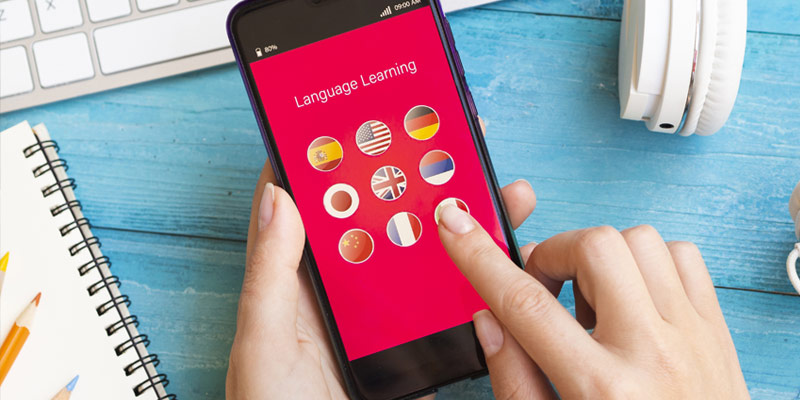
Anyone who wants to learn a new language today has unlimited options — especially those of the digital variety. Apps such as Duolingo, Babbel, and LingQ promise flexible learning anytime, anywhere. But despite the hype, can these apps really lead to fluent communication?

Numerous scientific studies and experience in language teaching suggest that apps alone cannot lead to fluency. Apps can teach vocabulary and grammar but understanding and participating in a lively conversation — often remains untrained. This is exactly where language schools like inlingua show their strength.

How Effective are Language Learning Apps? A Look at the Research

A study published by Duolingo itself with 225 participants who learned Spanish or French exclusively through the app showed that in the end, they reached the intermediate level (measured by ACTFL) in reading, but only the novice level in listening comprehension. (duolingo-papers.s3.amazonaws.com)

The result shows that learning with apps can lead to progress in reading and partial understanding but falls short when it comes to full comprehension or speaking.

Furthermore, a systematic review of AI-based chatbots in English language teaching reveals that such tools can be a supportive supplement but “still need to be improved in terms of context and culture-specific discourse formation”. (Cambridge University Press & Assessment)

Another analysis in Studies in Second Language Acquisition emphasizes the role of conversation and interaction in language learning processes (“Interaction Hypothesis”). The exchange of dialogue is essential for developing language competence. (Cambridge University Press & Assessment)

Finally, research in the field of second language anxiety indicates that learners with higher levels of inhibition are less willing to engage in conversation – which is precisely why a supportive environment (e.g., with trainers) is necessary. (Cambridge University Press & Assessment)

Together, these studies show that apps have their place, but interaction, live correction, and communicative immersion remain indispensable.

Grammar Apps vs. Language Trainers: What are the Differences?

Language trainers/language schools

  • Individual feedback, error correction, courses tailored for learners needs
  • Real-time discussions, role-play, spontaneous dialogues

Emotional and motivational factor through interpersonal contact

Apps (Duolingo, Babbel, LingQ, etc.)

  • Focus on grammar drills, vocabulary training, short exercises
  • Users often practice alone, with automated feedback

Useful for repetition and self-study, but limited in terms of free communication

The difference lies less in the content than in the type of application: an app can provide structure, but language develops through exchange.

Why Conversation is Central at inlingua

At inlingua, one thing is clear: we don’t treat speaking as secondary—it’s the core. Grammar and vocabulary are embedded in dialogues, discussions, and everyday scenarios.

This is exactly where the inlingua method comes. Our method has consistently focused on communication for over five decades – and is now used in a revised, modern form. With the DICES model (Discover – Interact – Communicate – Evaluate – Solidify), learners go through five phases that lead from their first encounter with the language to confident use.

  • Discover: New content is introduced in realistic situations.
  • Interact: The language is actively used – in all skills, with a special focus on speaking and listening.
  • Communicate: Learners practice spontaneous communication in authentic contexts.
  • Evaluate: Feedback and reflection ensure conscious progress.
  • Solidify: What has been learned is anchored in a sustainable way – in a playful and practical manner.

This structure ensures that conversation is not just a practice area, but the actual goal: to be able to use the language actively. With the new NextGeneration materials and digital supplements such as my.SmartLearning, the method is further strengthened and adapted to the needs of modern learners.

Flexibility – no Longer the Sole Preserve of Apps

A key argument used by the app developers is their flexibility: you can learn whenever and wherever you want.

But modern language schools now offer this too:

  • Face-to-face lessons in small groups or one-to-one
  • Online training, live with trainers
  • Digital platforms (e.g., my.SmartLearning) as a supplement

This allows inlingua to design a flexible learning concept that adapts to your everyday life – without sacrificing the human factor.

Hybrid Learning: The Best of Both Worlds

The term “blended learning” refers to the combination of digital resources and face-to-face teaching. Numerous studies show that this model often leads to the best learning outcomes.

inlingua offers:

  • my.SmartLearning for self-directed practice of grammar and vocabulary
  • Live lessons for conversation, practice, and feedback
  • Symbiosis of digital flexibility and personal support

This allows learners to benefit from both structured training and lively exchange.

Orientation Instead of a Flood of Apps

Many people who want to learn a new language face a dilemma: too many apps, no clear choice. Time is often wasted trying things out.

A language school like inlingua offers structure, planning, and targeted support:

  • Individual learning plans
  • Support from experienced teachers
  • Continuous feedback and adjustment
  • Motivation through community and personal coaching

This saves time, reduces frustration, and leads to lasting progress – far beyond what many apps can achieve.

Conclusion: Apps as a Tool, not a Solution

Language apps have their place: they enable flexible practice and a low entry threshold. But language proficiency only develops through interaction — and an app is not enough for that.

Research clearly shows that interaction, conversation, and correction are essential for real learning success (Interaction Hypothesis) (Wikipedia), and inhibitions are reduced more quickly when speaking in a supportive environment (Cambridge University Press & Assessment)

inlingua consistently combines digital tools such as my.SmartLearning with dialogue and human support. This creates a lively, effective learning environment that goes far beyond pure app learning – exactly what really matters when learning a language.

Happy learning!

Why Every Trainer Should Use the New TRP: A Game-Changer for Language Teaching at inlingua 

At inlingua, we believe that making our trainers lives easier through consistency and clarity in our teaching materials is key to delivering exceptional language training. That’s why we’re excited to present the newly re-written and re-designed Trainer Resource Pack (TRP). It is a comprehensive tool that empowers trainers to teach with confidence, efficiency, and full alignment with the new inlingua DICES method.

Whether our trainers have been with us for decades or are just starting, the TRP is more than just a resource, it will be their day-to-day teaching companion. 

What is the TRP? 

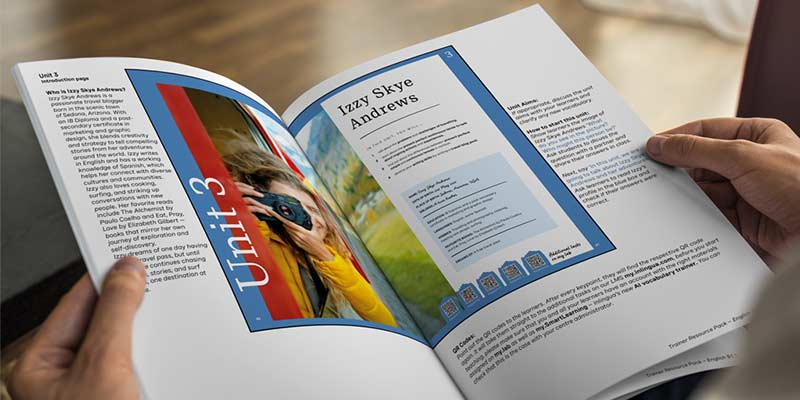
The Trainer Resource Pack is an interactive teaching guide that accompanies our newest book inlingua English B1.1 page by page. But it’s not just a set of instructions. It offers: 

  • Step-by-step teaching guidance for each page of the Student’s Book 
  • Differentiation suggestions to adapt tasks for various learner needs 
  • Instructional prompts and resource sheets ready to use in class 
  • Weave boxes that help you integrate skills and focus points naturally 
  • Answer keys and visual layout integrated directly into each task of the Student’s Book for fast reference 

All of this is displayed on a clear double-page spread, meaning trainers no longer need to juggle multiple documents or prepare separate lesson plans. Everything they need to deliver an inlingua lesson, the what, the how, and the why, is right in front of them. 

Why the new TRP is a Game-Changer 

With the new TRP, trainers can save lots of time on planning. The TRP does the planning for you, everything is aligned with the inlingua method and very easy to navigate. Every step is mapped out with intention and precision. 

The TRP reinforces the unique inlingua DICES method by embedding its principles into every task, question, and sequence. This means learners receive the same high-quality approach, no matter the trainer or location. 

Teach Flexibly and Effectively 

It also allows you to teach flexibly and effectively. If the trainer needs a task adapted for a stronger group or fast-finishers, or if they can’t quite find the right words to explain an abstract concept or vocabulary item, the TRP has it all covered. Its built-in differentiation and teaching tips allow for flexibility while maintaining a strong pedagogical core. 

What’s New in This Edition? 

We have worked on a complete visual overhaul. The TRP is clean, trainer-friendly, and aligns with the layout of the Student’s Book. 

The answer key is fully integrated in the TRP. No more flipping pages or switching tabs, but just one cohesive view. 

We have also enhanced trainer support. There are more prompts, more suggestions, and more clarity on how to adapt activities in real time. 

It’s not just updated, it’s transformed into a tool that reflects the modern trainer’s needs in a fast-paced, quality-driven teaching environment. 

Final Thought: More than a Handbook 

We think of the TRP not as a manual, but as a teaching partner. It supports the trainers’ expertise, streamlines their workflow, and helps them deliver consistently outstanding lessons that make a difference for learners. 

We’re committed to empowering our trainers. The new TRP is one of the ways we’re putting that commitment into action. 

If you have been following our recent blog series, you will know we are about to launch a new series of EFL materials. With the release of the Next Generation materials, we are not simply updating our coursebooks, we are meeting the challenge to provide the material that is needed to learn English in a digital world.

Central to this new approach are two methodologies: blended learning and the flipped classroom. Together, these strategies reflect our belief that modern learners thrive best when given the flexibility, autonomy, and support to learn in ways that match their lives, while still benefiting from the human connection that defines inlingua training. 

Teaching in Tune with Today 

The traditional model of language teaching, where new content is introduced by the teacher in class, then practised independently at home, no longer matches the expectations of today’s learners. The flipped classroom turns this structure on its head: learners first engage with new content on their own, through digital materials, and class time is then dedicated to meaningful interaction and practice. Flipped learning has been found to have “a significant positive impact” on proficiency and research results “demonstrate the effectiveness of this approach over the traditional face-to-face approach.” 

Blended learning supports this model by combining in-person or virtual lessons with self-guided online activities, creating a seamlessly integrated learning experience. Learners benefit from flexibility and personalisation, while still being guided by experienced trainers who help bring the language to life.

At inlingua, this shift is not just theoretical. It is embedded into the very structure of our Next Generation courses. Our learners are introduced to vocabulary and grammar topics through my.lab and my.SmartLearning our AI-powered vocabulary trainer on our LMS my.inlingua. By the time they enter the classroom physically or virtually, they are ready to speak, interact, and apply what they’ve learnt. 

A Pedagogical Framework for the Future 

The new materials have been developed in line with our inlingua DICES Method: Discover, Interact, Communicate, Evaluate, and Solidify. This framework promotes learner engagement at every stage of the journey. The flipped learning model is flexible: learners can choose to explore new language in advance on my.inlingua if it suits their learning style, or they may prefer to complete the first two stages of the DICES Method – Discover and Interact – during their live sessions. 

Learners are encouraged to become active participants in their own progress, rather than passive recipients of knowledge. At the same time, it supports trainers by offering a clear, structured approach that allows them to focus on guiding, correcting, and encouraging spontaneous language use. 

A Smarter Ecosystem for Smarter Learning 

To make this approach work in practice, we have a whole ecosystem of digital tools that support both learners and trainers: 

my.inlingua, provides an intuitive platform for additional language practice, content assignment, and progress tracking. my.lab delivers targeted, interactive self-study activities aligned with each unit of the course. And my.SmartLearning offers a personalised vocabulary trainer that uses artificial intelligence to help learners retain what they’ve learned efficiently and effectively. 

All of these tools are fully integrated with our course materials, ensuring a coherent and consistent experience for learners across every modality. 

Transforming the Role of the Trainer 

Blended and flipped approaches do more than change the structure of lessons, they also redefine the role of the trainer. At inlingua, our trainers are facilitators and communicators. With learners arriving better prepared, trainers can focus on guiding conversations, correcting errors, and helping learners refine their fluency in real-time. 

This model leads to more dynamic sessions, higher engagement, and more visible progress. It is not about replacing the teacher with technology and AI, it is about elevating their role and ensuring their time is used where it matters most. 

Meeting the Needs of the Next Generation 

We understand that learners today are balancing busy lives, professional responsibilities, and diverse goals. They are digital natives who expect flexibility, relevance, and real-world application. Our Next Generation materials are designed to meet these expectations while staying true to our core values of quality, communication, and personalised learning. 

By combining sound pedagogy with smart technology, we are equipping learners not just to pass tests, but to use language confidently in real life. 

As we continue to roll out the Next Generation series across the inlingua network, we remain committed to leading the way in learner-centred, future-ready language training. 

Reimagined for Real-World Communication

For over five decades, the inlingua method has been at the heart of our language training — focused, direct, and above all, communicative. Now, we are proud to introduce the rewritten inlingua method, a fresh, research-informed, practice-oriented take that preserves our legacy while evolving to meet the demands of today’s learners. This new method will be launched together with our NextGeneration materials, a suite of resources designed to bring the new approach to life with engaging, real-world content.

A Modern Take on a Time-Tested Approach

Language learning isn’t just about acquiring vocabulary by repetition of words and phrases. It’s about meaningful communication—being able to connect, collaborate, and express yourself with confidence. The redesigned inlingua method focuses on this principle through a five-phase structure that guides learners from discovery of language to deep integration.

We call this structure DICES – an acronym that stands for Discover Interact Communicate Evaluate Solidify. The word dices also bears its own meaning: in Latin, it means “you will speak” – which is exactly what we want our learners to do from their very first lesson.

Let’s take a closer look at each phase:

Discover

Learning begins with relevance. In this phase, learners are introduced to key vocabulary and grammar in a way that’s both digestible and anchored in authentic use. By grounding new content in real-life situations, we reduce cognitive load (Sweller, 1988) and support long-term retention.

Interact

Learners actively engage with the language across all skills—speaking, listening, reading, writing, and mediation. The focus is on building fluency through accuracy with repeating communicative practice that reflects how language is actually used.

The activities in this phase are designed to support varying levels of proficiency, enabling differentiation, encouraging risk-taking and reducing the fear of “getting it wrong”—a key factor in learner motivation (Dörnyei, 2009).

Communicate

This is where things get real. Learners move beyond controlled practice into activities designed to promote authentic interaction. Whether it’s role-plays, collaborative tasks, or information-gap activities, the goal is the same: develop spontaneous, confident communication in personally relevant contexts.

Evaluate 

Feedback and reflection are built into the learning journey. Regular self-checks and formative assessments help learners monitor their progress and identify areas for improvement. Trainers are also equipped with tools to offer targeted, constructive feedback, promoting a growth mindset and continuous development.

Solidify

This final phase is where consolidation happens. Through game-based repetition and a collaborative project, learners reinforce what they have learnt in a fun, low-stress environment. aligning with task-based learning principles, where “learning emerges from the use of language in meaningful tasks” (Ellis, 2003).

Why This Matters

In short, the new inlingua method combines the best of our pedagogical tradition with modern learning science. It’s designed not only to help learners know the language—but to use it, with confidence and clarity, in the moments that matter most to them.

By bringing together the new method, the NextGeneration materials, and powerful digital learning ecosystem with integrated AI learning features, inlingua is setting a new standard in personalised, effective language training. We’d love to hear your thoughts. How do you see these changes aligning with your own teaching experience or expectations? Let’s start a conversation in the comments.