How AI Authoring Tools are becoming the ultimate time-saver for language trainers
In the ever-evolving landscape of language learning, technology continues to reshape the way we teach, learn, and most recently also how we create our teaching content. The newest innovation, AI Authoring Tools based onLarge Language Models (LLMs), is set to fundamentally transform how educators and learners approach language acquisition. This blog delves deep into the features, benefits, and practical applications of the cutting-edge inlingua AI AuthoringTool – a prime example of utilising AI to the learners’ and trainers’ benefit.
The Challenge of Increasing Learners’ Active Vocabulary
Vocabulary acquisition is fundamental to language learning but creating meaningful and pedagogically sound vocabulary tasks that foster active use in language learners can be time-consuming and immensely difficult. If you are a teacher, you know how you or your colleagues often spend hours curating words, writing relevant definitions, ensuring contextual relevance, and balancing difficulty levels. Furthermore, poorly constructed lists will hinder progress, leading to frustration and disengagement in learners. A prime example of a lose-lose situation!
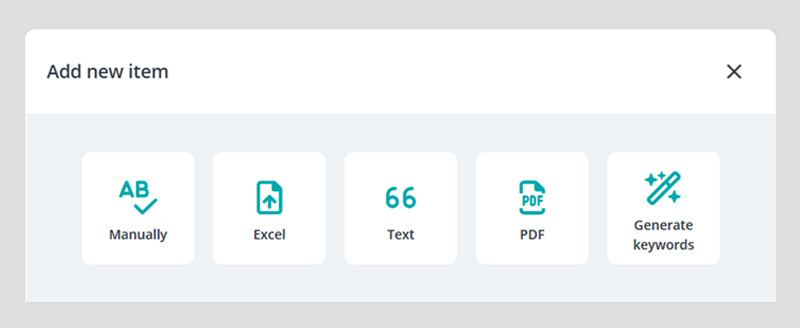
This is exactly where AI Authoring Tools come into play. With only a few well-written prompts, the AI will create hundreds of vocabulary items, level-appropriate definitions, and set them into the right context, ready for learners to use in multiple languages. Additionally, it will create matching images for relevant vocabulary, as well as create authentic audios for listening and pronunciation practice.
Let’s have a look at this, shall we?
What can the inlingua AI Authoring Tool do?
- Analyse Context: The tool can analyse text from any source—articles, dialogues, or learning materials—to extract contextually relevant vocabulary.
- Create Glossaries: Based on a trainer’s prompts, the tool will create relevant glossaries for any context in English, German, Spanish, Catalan, French, Italian, and Portuguese.
- Assess Difficulty Levels: By evaluating word frequency and linguistic complexity, the tool ensures that the vocabulary is appropriately challenging for learners at different proficiency levels.
- Provide Keywords, Definitions and Examples: The tool automatically generates concise keywords, definitions and example sentences tailored to the learner’s language level.
- Create Images: Depending on the vocabulary item, especially at a lower level, it is easier for a learner to understand its meaning through an image. The AI Authoring Tool will create it for you.
- Incorporate Customisation: Educators can fine-tune the lists by adding or removing words, adjusting definitions, or changing example sentences to align with specific teaching objectives.
Key Benefits
- Time Efficiency: Trainers can create high-quality vocabulary lists in minutes, freeing up time for lesson planning and other critical tasks.
- Learner-Centric: The tool adapts to different proficiency levels, ensuring learners receive vocabulary that is both useful and achievable.
- Enhanced Engagement: By incorporating words from authentic and engaging texts, the tool makes vocabulary learning more relevant and enjoyable.
- Consistency and Accuracy: AI-driven suggestions ensure that vocabulary lists are pedagogically sound and linguistically accurate.
This all sounds great, but what happens with the content once it’s created, I hear you ask. Well, have a look at the next paragraph:
Great! But what now?
As is the case with the inlingua AI Authoring Tool, most tools will be integrated or directly connected to your Learning Management System (LMS). Therefore, learners are able to access your AI-generated content from their accounts, usually in the form of engaging and fun activities. inlingua’s interactive LMS, my.inlingua, offers the following features to its users.
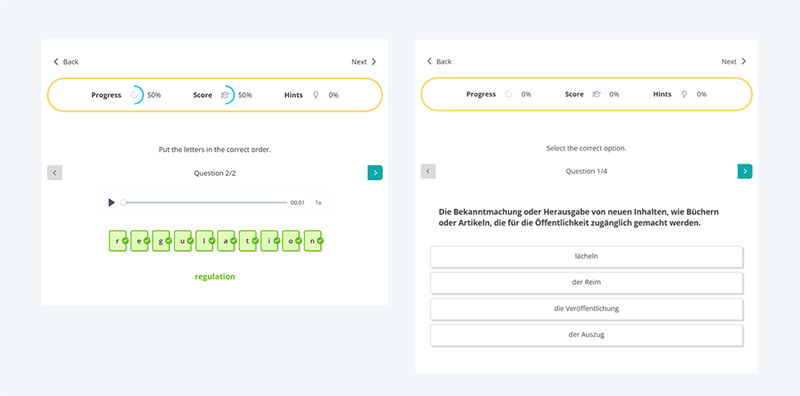
- Personalised Learning Paths: Activities and Tasks are continuously created based on the individual learner’s previous performance.
- Personalised Learning Context: Your student is super interested in a niche topic, and you have found out that talking about it is the quickest way for them to learn the target language? Trainers can create glossaries using the context of interest and assign it directly to individual learners.
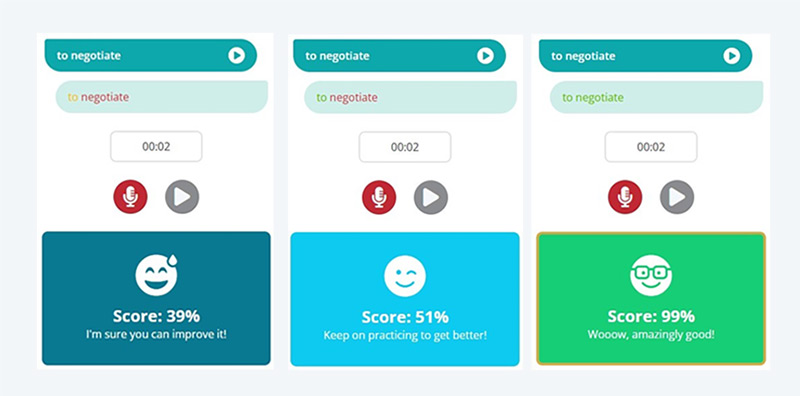
- Speech-recognition: Learners can improve their pronunciation by using the integrated speech-recognition tool which gives them instant feedback.
- Self-Directed Learning: Learners can practise their vocabulary wherever and whenever they like. my.inlingua is available on a phone, tablet, and computer.
- Assessment Preparation: They can use targeted AI-generated vocabulary lists to help them prepare for exams or specific language tasks.
- Additional post-lesson practice: During a speaking or writing lesson, there is usually a lot of new vocabulary that needs clarification. Trainers can simply create a glossary and let the AI do its magic, generating definitions and examples ready for learners to practise with.
- Pre-teach vocabulary: Learners can prepare for a lesson by practising the vocabulary before coming to class.
Turning the focus on what truly matters
AI Authoring Tools represent a significant leap forward in language learning technology. By simplifying the process of creating effective vocabulary exercises, we empower educators and learners alike.
AI makes language learning more accessible, engaging, and effective for everyone. This tool is about revolutionising how languages are taught and learned. By providing educators with reliable, adaptable tools and enabling learners to take charge of their own progress, they can focus on what truly matters: mastering the language!
The inlingua AI Authoring Tool is exclusively available to licensees and learners of official inlingua centres. If you would like more information on this, contact service@inlingua.com.
Share your thoughts in the comments section below. We would love to hear from you! Written by: Julia Silvère